The geography of food delivery: Gig work, mobility and urban space
How food delivery work is transforming the way we live in cities.
By Rina Salsberg & Ignacio Tiznado-Aitken, Department of Geography & Planning
Approximately 250,000 Canadians were engaged in platform-mediated gig work by 2022, and some estimates suggest that the global total is as high as 435 million.1 Among them, food delivery workers (FDWs) have become one of the most visible groups of this workforce.
Food delivery work is rapidly transforming the way we live in cities. It is changing how governments and platforms regulate and protect workers, how consumers use food delivery services, how FDWs experience and navigate urban spaces, and how their presence affects other urban residents.
This five-part mini-series explores the many dimensions of this non-traditional form of work that has quickly become a global phenomenon. As urban residents we are all stakeholders in this story, whether we order food regularly, are a policymaker, or simply share the road with delivery workers. Now, more than ever, it is crucial to understand how food delivery work fits into the broader urban ecosystem.
This series is based on research findings from the Multidisciplinary Urban Graduate Seminar (MUGS) course The geography of food delivery: Gig work, mobility and urban space taught by Professor Ignacio Tiznado-Aitken in winter 2026.
What is food delivery work?
While the terms ‘gig work’ and ‘platform work’ are easily confused, they are not interchangeable. Gig work encompasses any kind of short-term, one-off employment. It predates the COVID-19 pandemic, as moments of great global shifts and uncertainty, such as the 2008 financial crisis, have pushed many to enter the gig economy in the past.
The pandemic catalyzed the growth of a particular subset of work within the gig economy: platform-mediated food delivery work. In this line of work, digital platforms such as Deliveroo, Uber Eats, Door Dash, and SkipTheDishes, act as the connector between restaurants who supply food, customers who order, and workers who deliver. When indoor dining was heavily restricted, restaurants relied on delivery platforms to sustain themselves. At the same time, job losses and reduced working hours led many workers to seek income through food delivery.

The promise and reality of food delivery work
Platforms promise their workers some key advantages over traditional workplaces, generally in the form of increased freedom and agency. However, in reality, the nature of food delivery work is far more complicated, determined by its interactions with the sociodemographic profile of its workers, labour laws, and the physical and material urban environments.
1. The ‘freedom’ of platform-mediated food delivery work
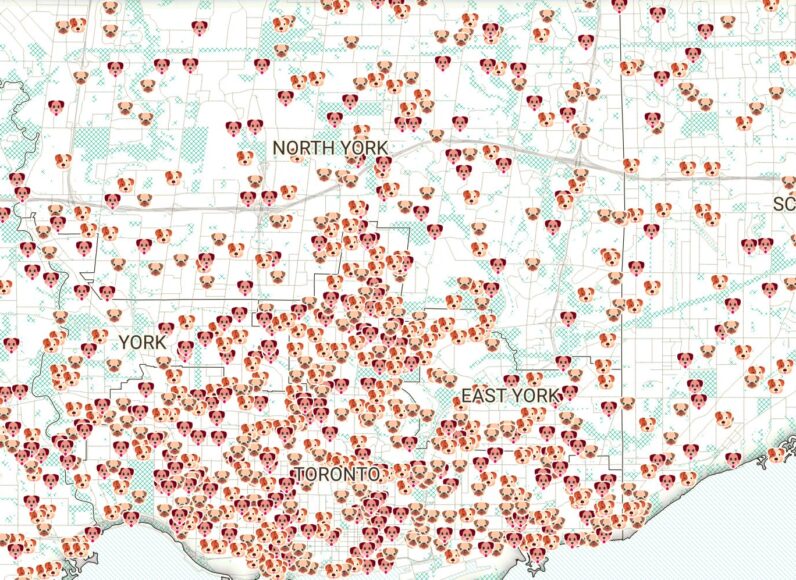
A common assumption of platform-mediated food delivery work is that it gives workers the freedom to decide when, where, and how much they work. Yet, FDWs are not as free as the platforms make them seem. Food delivery work is time- and location-sensitive, as demand fluctuates according to meal times and restaurant or population density. It is difficult for FDWs to work ‘whenever they want’, because the availability of orders is embedded in the natural flow of customer demand. Orders peak during lunch hours around 11am to 1pm, and spike again between 5pm-8pm. The financial precarity that FDWs often face can further motivate them to work during peak times and around ‘hot spots’ or areas with high demand to maximize earning potential, and even pressure them to work longer hours than traditional office jobs. In China, FDWs work an average of 8.8 hours a day.2 As a result, what is often presented as ‘freedom’ can also become a veil for the pressure that FDWs face to work more.
There is a fundamental tension between the workers’ supposed autonomy to choose to work, and the challenging reality of financial pressure and risk. Food delivery work goes hand in hand with risky strategies in the pursuit of higher earnings. Workers often travel at high speeds during deliveries,3 work during hazardous weather,4 or accept less desirable orders, such as those that require them to travel in neighbourhoods without bike infrastructure. These risks are magnified by the fact that due to their status as independent contractors rather than employers of the platform, they are exempt from benefits and protections such as employment insurance.5 Combined, these concerns challenge the simplistic notion that participation in platform work reflects genuine choice, and instead, raises the question of whether FDWs are structurally forced into it in the absence of viable alternatives.

2. Platform-mediated food delivery work as an entry point into the labour market for all
Food delivery platforms champion their low barriers to entry. Platforms demand no formal qualifications, prior work experience, or specialized skills, making work accessible to groups often excluded from traditional labour markets, including recent immigrants, people with precarious immigration status, and students. However, the assumption that low barrier-to-entry implies low skill might be misleading. The work from Adam Badger points out that platforms themselves do not require workers to be high-skilled because their business model relies on a massive surplus of replaceable workers.6 Yet, as workers are paid per order rather than by a guaranteed wage, their survival depends on mastering strategies to maximize earnings by completing orders efficiently while competing for a limited pool of available orders. Calling food delivery work ‘low skill’ overlooks the strategic, embodied, and contextual skills workers must develop to make a living.
Furthermore, platform work is often packaged with the promise of being a gateway into more stable or fixed-time work opportunities. However, this promise is not always fulfilled. While gig work may provide an accessible entry point into the labour market, experience gained through gig work can be valued less highly by conventional employers than equivalent traditional employment experience, partly because the skills they develop through this work are often undervalued in other employment contexts.7
3. An alternative to traditional workplace surveillance
Degradation of work conditions in the traditional workplace is frequently cited as a reason workers turn to the gig economy.8 Many are drawn to platform work because it frees them from toxic managerial oversight or provides a sense of being ‘your own boss’. However, platform work fills the absence of a designated manager by making everybody in the public a manager. The way that rating systems are heavily weighted gives customers a direct impact over the future work allocation for FDWs.9 Even as FDWs travel around the city, they are constantly surveilled by the broader public on their use of public space and roads. Furthermore, platform algorithms that allocate work notoriously lack transparency in how they operate.10 As a result, workers are left in the dark about how their performance is impacting (or not) what orders they see, or how much their orders get valued at. The price of escaping traditional workplace surveillance, it seems, is becoming a subject of continuous scrutiny of customers, algorithms, and the public.
Why food delivery work matters to us all
As urban residents, all of us interact with food delivery work in some way, every single day. How we show up in the urban space that we all share impacts the experience of others. This means that the work conditions and experiences of food delivery workers both shape, and are shaped by, everyone who uses these services and coexists in the same urban infrastructure. Over the next few posts, this series will dissect food delivery work by highlighting different angles: the workers’ profiles, labour rights and challenges, how FDWs navigate public spaces and mobility infrastructure, and future outlooks on the topic. Understanding these dimensions is essential for making sense of how platform work has become embedded in the everyday functioning of our cities, and how it is reshaping the urban experience of workers, consumers, and everyone in between.
- Government of Canada. (2023, March 22). What we heard: Developing greater labour protections for gig workers. https://www.canada.ca/en/employment-social-development/corporate/portfolio/labour/programs/labour-standards/reports/gig-workers-what-we-heard.html; Datta, N., Rong, C., Singh, S., Stinshoff, C., Iacob, N., Nigatu, N. S., Nxumalo, M., Klimaviciute, L. (2023). Working Without Borders: The Promise and Peril of Online Gig Work. World Bank. https://doi.org/10.1596/40066 ↩︎
- Ge, R., Lu, S. F., Mao, W. (2024, October 20). The Impact of Heat Hazard on Gig Economy Workers: Evidence from An On-demand Food Delivery Platform. (October 20, 2024). SSRN. http://dx.doi.org/10.2139/ssrn.4993644 ↩︎
- Zhang, J., Xue, J., Deng, Y., Li, Z., & Li, Y. (2025). To Be (Safe), or Not to Be (Safe)? A Daily Exploration of Why and When Gig Workers Stay Safe Under Customer Demands. Journal of Organizational Behavior, 46(7), 1038–1056. https://doi.org/10.1002/job.2874 ↩︎
- Thorpe, A., Johnson, M., Hercus, C., Rudge, T., Boufous, S., & Chong, D. (2024). Infrastructure, regulation and the experiences of delivery cyclists in Australian cities. NATURE CITIES, 1(11), 760–768. https://doi.org/10.1038/s44284-024-00145-2 ↩︎
- Cant, C. (2019). Riding for Deliveroo: Resistance in the new economy. Polity Press. ↩︎
- Badger, A. (2022). Labouring at the Interface: Exploring the rhythms and resistances of working in London’s food delivery gig economy. [Doctoral Thesis, Royal Holloway, University of London]. ↩︎
- Adermon, A., & Hensvik, L. (2022). Gig-jobs: Stepping stones or dead ends? Labour Economics, 76, Article 102171. https://doi.org/10.1016/j.labeco.2022.102171 ↩︎
- Baril, É., & Vultur, M. (2025). Navigating Streets, Restaurants, and Algorithms: A Study of Young Immigrant Food Delivery Couriers in Montréal and Toronto. LABOUR-LE TRAVAIL, 95(95), 121–144. https://doi.org/10.52975/llt.2025v95.007; Woodcock, J., & Graham, M. (2019). The gig economy: A critical introduction. Polity Press; Popan, C. (2024). Embodied Precariat and Digital Control in the “Gig Economy”: The Mobile Labor of Food Delivery Workers. The Journal of Urban Technology, 31(1), 109–128. ↩︎
- Rosenblat, A. (2018). Uberland : how algorithms are rewriting the rules of work. University of California Press. ↩︎
- Baril, É., & Vultur, M. (2025). Navigating Streets, Restaurants, and Algorithms: A Study of Young Immigrant Food Delivery Couriers in Montréal and Toronto. LABOUR-LE TRAVAIL, 95(95), 121–144. https://doi.org/10.52975/llt.2025v95.007 ↩︎