


Experiment
Collaborate
Engage

School of Cities Municipal Election Issue Briefs
Ahead of the October 26, 2026 municipal elections, the School of Cities presents a series of short issue briefs for candidates and incoming councils. Developed with U of T researchers from across disciplines, each brief offers a bold but implementable idea on issues like housing, congestion and public safety, backed by evidence from cities worldwide.

Canadian Municipal Barometer
The Canadian Municipal Barometer (CMB) is a national research partnership that seeks to understand and improve local democracy in Canada.

Visiting Professors
Meet the 2026-27 Visiting Professors – faculty from universities and research institutes in Canada and globally who will engage in urban-focused research and/or teaching, with a commitment to community engagement.

Urban Data Analysis & Storytelling Certificate
The Urban Data Analysis & Storytelling Certificate helps professionals transform complex urban data into insights that shape policy, planning, and community outcomes. Earn stackable microcredentials online and gain hands-on skills to drive evidence-based, impactful decisions in cities today.

Microcredentials: Coming in 2027-2028
The School of Cities professional programs portfolio equips urban professionals with the practical skills, strategic insight, and interdisciplinary knowledge needed to address complex urban challenges. Designed for working professionals across public, private, and non-profit sectors, these offerings combine applied learning with real-world urban issues.

Microcredentials: Future offerings
We are actively developing new professional programs and microcredentials, informed by emerging urban challenges and learner feedback. Our professional programs portfolio equips urban professionals with the practical skills, strategic insight, and interdisciplinary knowledge needed to address complex urban challenges.

Mapping Tariffs
Interactive map showing potential local impacts of U.S. tariffs on jobs and businesses across Canada
Climate Displacement & Cities
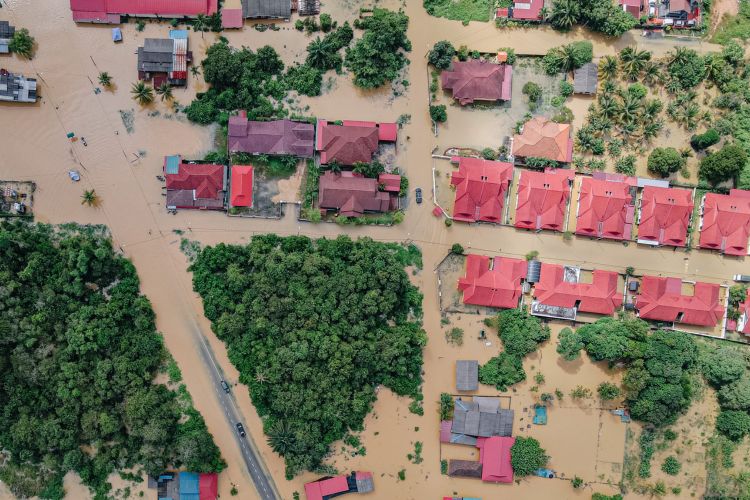
CIDRARC, hosted by the School of Cities, is a global network addressing climate-induced displacement and urban adaptation. It explores migration, risk management, and urban habitability through case studies from cities worldwide. The project highlights challenges cities face, including local and international displacement, which strains infrastructure and exacerbates poverty and inequality.

The Trees Lining our Streets
Diversity and equity of Canada’s street trees
highlights

The five Torontos
Cluster analysis of neighbourhoods in Toronto based on voting patterns

Visit every Toronto library by transit
Animated map of 10 tours visiting every public library in Toronto by public transit

Reframing Housing: Is Immigration Responsible for the High Cost of Housing?
Housing affordability continues to be a hot topic and key issue for many people in Canada and the United States. Often, the high cost of housing has been directly attributed to immigrants causing too much demand for a limited housing supply. But is that really the case? Research on the topic shows a far more nuanced relationship between immigration and housing costs.

The Cost of Ending Homelessness and Housing Need in Canada
What would it cost to guarantee everyone in Canada an affordable, adequate home? Carolyn Whitzman estimates at least $118 billion a year in financing, plus $5.7 billion in rent subsidies and supports. It’s a lot, she argues, but Canada can afford it, and it’s far cheaper than the alternative.

How long does it take to get to a library in Toronto?
Maps and analysis of transit and walking accessibility to public libraries

Food delivery work and the city
Food delivery has become a familiar part of urban life, but what does this work actually look like for the people behind our orders? From flexibility and financial pressures to mobility and public space, this article explores how platform-mediated food delivery is reshaping work and the way we experience cities.

Social geography and the mayoral vote
Comparative maps of Toronto census-tract social geography and mayoral election results

discard studies: nuclear colonialism and community activism
In the summer of 2026, the School of Cities had the pleasure of supporting Early Career Canadian Urban Leader Dana Prieto’s exhibition discard studies: forms of containment. Hosted at Gallery… Read more

Mapping tariffs: Reflecting on new Section 338 Tariffs
An update on potential local impacts of new Section 338 tariffs on jobs and businesses across Canada via maps and charts

Key findings from the Mobilizing Justice National Survey on Transport Poverty
Visualizing insights from a survey over 27,000 people across Canada

Impacts of foreign buyer taxes on housing markets
How rents and home ownership in the Toronto and Vancouver areas changed after their foreign buyer tax policies took effect.

Dogs in small spaces | Dog Days in the City, Ep. 4
People sometimes think that having a dog means you also need to have a big house with a big yard for it to play in. But as Steve and Sherman show us, dogs can also thrive in dense urban environments – and those kinds of areas can help us create more sustainable, equitable cities.
Latest media & news

School of Cities in Toronto Star | The Campaign Pitch: How a new program could give us clean parks, clear winter sidewalks and youth jobs
Toronto Star staff reporter Beatriz Baleeiro on the School of Cities election issue brief that explores the possibility of a standing youth hiring program, which could deploy young people within their local neighbourhoods and support them with mentorship and professional development.
This article is one in the Toronto Star’s four-part series called The Campaign Pitch, wherein they wrote about SofC election briefs, written in collaboration with U of T faculty, and presented them to the two main mayoral candidates for comment.

School of Cities in Toronto Star | The Campaign Pitch: Dedicated, long-term funding for youth programs
Toronto Star crime reporter Jennifer Pagliaro on the School of Cities election issue brief that explores the possibility of replacing the patchwork of short-term grants for youth programming with one permanent, multi-year funding stream, coordinated centrally within the City.
This article is one in the Toronto Star’s four-part series called The Campaign Pitch, wherein they wrote about SofC election briefs, written in collaboration with U of T faculty, and presented them to the two main mayoral candidates for comment.

School of Cities in Toronto Star | The Campaign Pitch: How Toronto could build and protect more affordable housing
Toronto Star business reporter Manuela Vega on the School of Cities election issue brief that explores the possibility of better supporting community groups and non-profit housing providers to acquire existing buildings as part of the City’s housing strategy.
This article is one in the Toronto Star’s four-part series called The Campaign Pitch, wherein they wrote about SofC election briefs, written in collaboration with U of T faculty, and presented them to the two main mayoral candidates for comment.

School of Cities in Toronto Star | The Campaign Pitch: What if there was a $9 charge to drive downtown?
Toronto Star transportation reporter Andy Takagi on the School of Cities election issue brief that explores the possibility of creating a congestion pricing zone around Toronto’s downtown area.
This article is one in the Toronto Star’s four-part series called The Campaign Pitch, wherein they wrote about SofC election briefs, written in collaboration with U of T faculty, and presented them to the two main mayoral candidates for comment.

Tara Vinodrai and School of Cities in Waterloo Region Record | 34,000 jobs in Waterloo Region exposed to tariff risks

School of Cities in U of T News | Researchers examine how commercial change is reshaping Toronto’s Kensington Market

Mark Fox in U of T Engineering News | Professor Mark Fox elected to the Royal Society of Canada

School of Cities in A&S News | Keeping Kensington livable: new research collaboration helps preserve one of Toronto’s most treasured neighbourhoods

School of Cities in Toronto Star | Opinion | Doug Ford used to rage against government waste. Now he’s behind Ontario’s biggest spending scandal

Matti Siemiatycki in CBC | Parallel construction projects on Carlton, Wellesley streets frustrating Toronto community

Karen Chapple in Fortune | It’s not just Canadian tourists snubbing U.S. cities. Business leaders are cancelling more trips to America as geopolitical tensions continue

Aniket Kali in The Hamilton Spectator | Housing supply is steadily increasing — so why are rents in Ontario soaring?
Upcoming Events see all

Memories of Black Toronto – Bringing the city’s Black history to the screen
Join the School of Cities in a screening of two AI-generated short films replicating daily life for 19th-Century Black Torontonians.

Knowledge Café | Using the Census: New tools for urban researchers
In this application-focused Knowledge Café, Zachary Taylor and Leanne Trimble will introduce urban researchers to the ever-expanding universe of historical and contemporary Census data that is available to them, and the challenges of doing so and also the support provided by the university’s Map and Data Library.

Knowledge Cafe | The paradox of prioritization in public sector algorithms
Join Erina Moon of U of T’s Faculty of Information for a talk on the role of public sector agencies in public resource distribution.

Knowledge Café | Caring for others, struggling for shelter
Data are not neutral. What is measured, who is represented, how categories are constructed, and how data are interpreted can either reveal existing inequalities or reproduce them. Hence, although housing… Read more
The School of Cities is a unique multidisciplinary hub for urban research, education, and engagement creating new and just ways for cities and their residents to thrive. Based at the University of Toronto and in a fast-growing, culturally diverse, and economically dynamic urban region, the School of Cities supports leading scholars, practitioners, and community members spanning disciplines and lived experiences to co-create new understandings, policies, and practices.
Learn more about us.